Why You Wake Up Tired: How Your Breath Eases Snoring, Insomnia & Apnea

Have you ever slept a full eight hours and still woken up feeling like you could go straight back to bed?
If so, you are far from alone. So many of us are doing everything we are told to do, and still waking flat, foggy and tired. We reach for another coffee, promise ourselves an early night, and wonder what we are doing wrong.
I have spent over thirty years working with the breath, and if there is one thing you take from this blog it is that the quality of your sleep is not made in the thirty minutes before bed. It is influenced by how you have been all day from the moment you wake up.
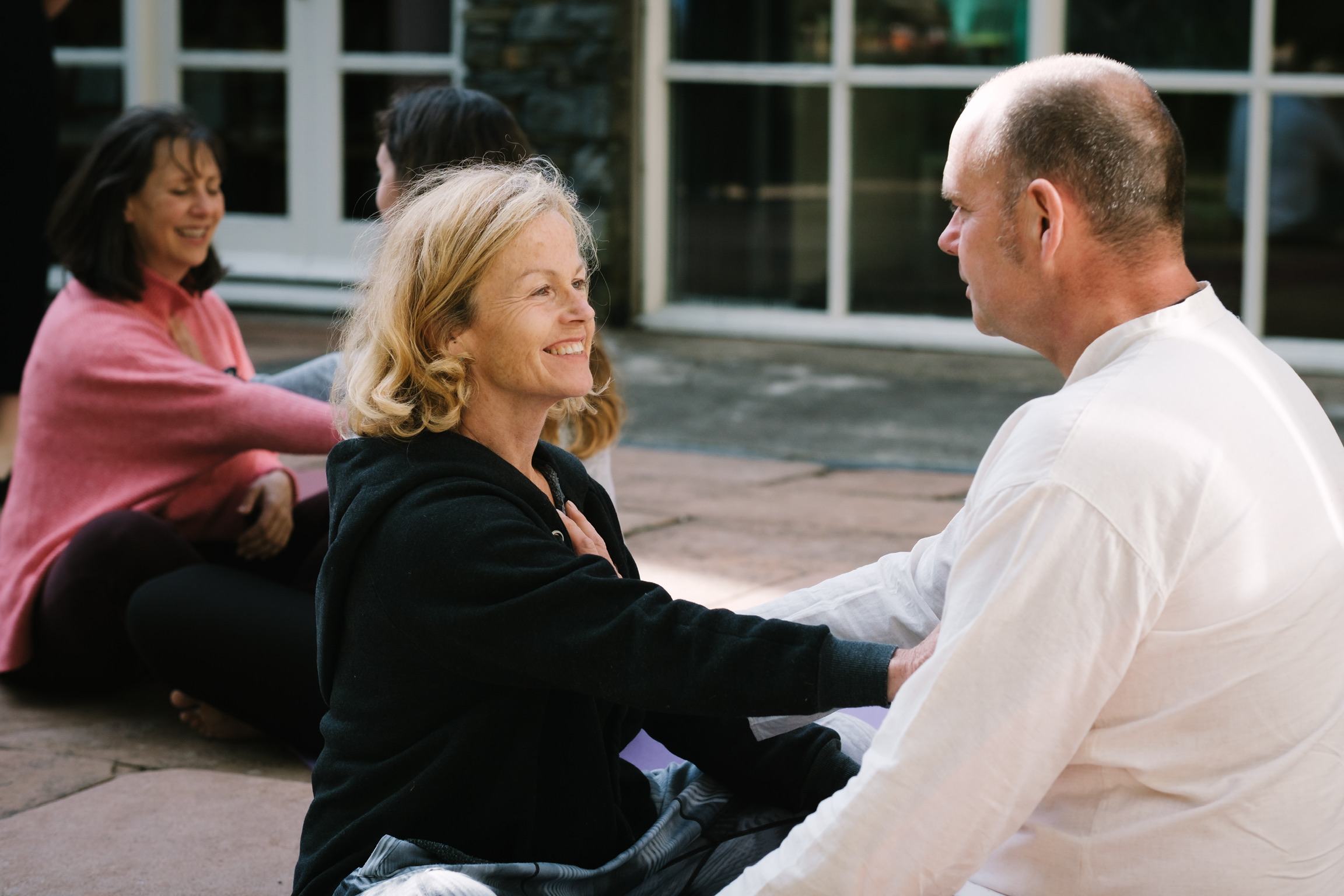
If you are having sleep issues then that shift of looking at how you treat your body, breath, life during the day changes everything. Let me explain why, and then give you some simple things you can start today.
Why you wake up tired even after a full night:
There are two settings in your nervous system. One is the sympathetic, often called fight or flight. You can think of it as the accelerator. The other is the parasympathetic, rest and digest. Think of it as the brake. You need the brake to fall into deep, restoring sleep.
The trouble is that most of us spend the whole day with a foot on the accelerator. We juggle housework, emails, family issues, deadlines, rushing and far too many worries. Then we climb into bed and expect the body to stop on command, as if sleep were a light switch.
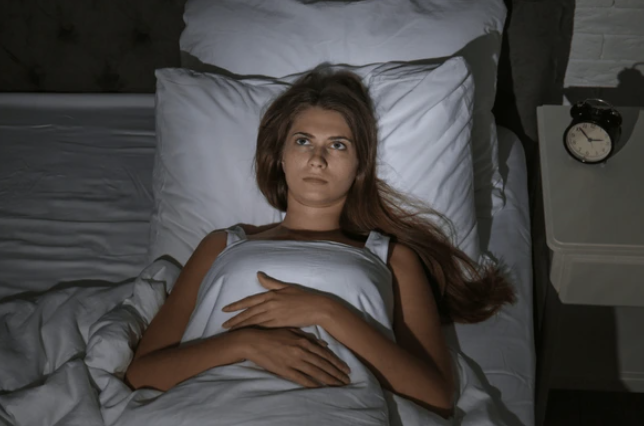
There are people who can do this, so then this blog isn’t for you! But for those of you who can’t just go to bed and have a full wonderful night’s sleep then you need to approach your bedtime differently.
I have gone in phases of my life when I have experienced this feeling of being exhausted, and yet with a buzzing energy, a kind of annoying energy, that won’t go away. There is even a phrase for it, “tired but wired.” That’s a nervous system that’s been revving all day, but it can’t find the brake at night.
This is why you can sleep eight hours and still wake up unrefreshed. If your body stays subtly on alert through the night, you never sink into the deep stages where real repair happens.
Three problems, one root
Here is the part that most articles miss. Insomnia, snoring and sleep apnea are usually treated as three separate problems. In my experience they share a common root, which is the breath and the airway.
Snoring is mechanical. As you sleep, the soft tissues at the back of the throat relax and narrow, and the air pushes past them, so they flap and vibrate. That vibration is the sound. Snoring is not a character flaw, and it is not simply your age.
Sleep apnea is the same story taken further. The airway doesn’t just narrow, it collapses and closes, so breathing actually stops for a short time. Then the body panics and hauls you up with a gasp to start you breathing again, over and over through the night. (If you hear long pauses, gasping or choking, this deserves proper attention, and I will say more below.)
And insomnia, so often, is a nervous system that never came off the accelerator. All three come back to how you are breathing.
Nose breathing, by day and by night
If you take one physical action from this whole piece, let it be this to breathe through your nose, as much as you can, twenty four hours a day.
Your nose is not simply a hole for air. It’s a preparation chamber. The tiny hairs filter and clean the air, the nose warms and moistens it, and releases nitric oxide, a gas that helps you absorb more oxygen and relaxes the blood vessels, which genuinely helps you sleep.
Mouth breathing does the opposite. It’s the body’s emergency setting, fast and shallow, the way you breathe when you are gasping for air. So if you mouth breathe all day and all night, you are telling your nervous system that there is an emergency, all day long. The research is pretty astounding. In one experiment, when people were made to breathe through the mouth for a week by blocking up the nose, snoring increased by around 1500%.
How to breathe yourself calm during the day
This is the piece that people so often misunderstand. You don’t need to stop your life to change your nervous system. You can do it while you work, cook, walk or sit in traffic.
The secret is simpler than you might think. It’s not about breathing more, in fact the opposite. It’s about breathing slower and lower, through the nose, and letting the out breath be relaxed. The out breath is your brake. Every time you breathe out slowly, you press that parasympathetic pedal and tell the body, “I am safe, I can settle.”
- Lengthen the exhale. Let your out breath be a little longer than your in breath. Breathing in for a count of four and out for six is a great place to start.
- Catch yourself holding your breath. When we concentrate, on a screen or a worry, most of us either hold the breath or take shallow little sips high in the chest. There is even a name for it now, “email apnea.” Simply notice, and let the breath go.
- Hang the habit on what you already do. A few slow breaths every time you sit at your desk, at a red light, while the kettle boils. Life is full of little moments, and you can use these to adapt your breathing if only for short times. You are not adding another chore. You are breathing differently underneath the life you are already living.
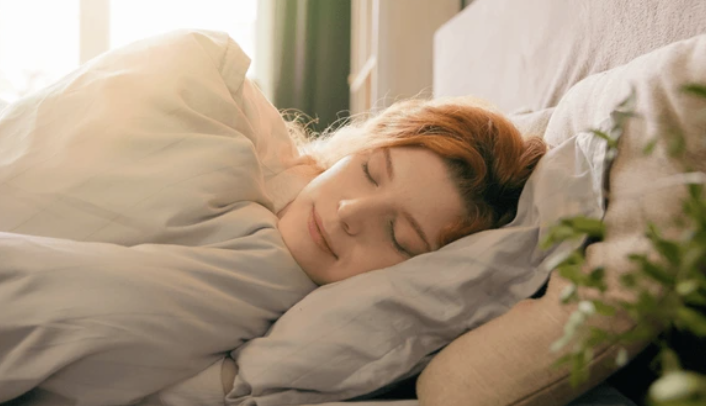
Do this, and the night begins to take care of itself. This is what transformed my own sleep.
Tone the airway: simple throat exercises for snoring
Some good news in relation to snoring and sleep apnea is that the muscles around the airway can be toned, just like any other muscle in the body. This is backed by research, and people who practice these regularly can reduce their snoring, and milder sleep apnoea, by a significant amount.
Here are a few exercises to try. Hold each one for about five seconds, two or three times a day:
- Stick your tongue out as far as it will go, lift the tip, and hold. Then move it slowly from side to side.
- Press the tip of your tongue up onto the roof of your mouth, the whole tongue flat against it, and hold.
- Keep the sound high and bright and say a long “Eeee,” feeling the muscles at the back of your throat work. Then lift the soft palate, as if you were starting a yawn, and hold.
None of this is instant. It takes a few weeks. But remember, this is the fishing rod, not the fish. It improves the toning of your airways.
Small changes that help tonight
Alongside the breath, a few practical things:
- If your nose feels blocked, don’t simply give up and open your mouth. Drink plenty of water, try a neti pot in the morning to rinse the nose, and use nasal strips or dilators to hold the nostrils open.
- Sleep on your side. When you do that, the jaw and tongue fall forward and the airway stays more open. If you must sleep on your back, prop your head so it tilts slightly forward, never dropped back.
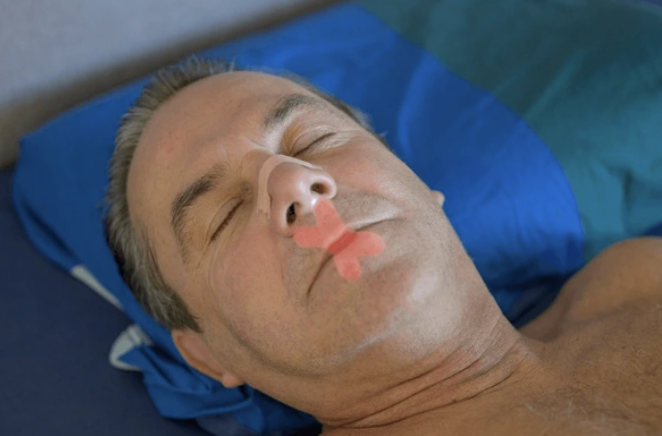
- Consider mouth taping. A small piece of tape that keeps the lips together while you sleep can train you to breathe through the nose. (One caution: if you have moderate to severe sleep apnea, don’t jump straight to this. Build up slowly and get advice first.)
The question worth asking
Before I leave you with a practice, one honest question, and I ask it with kindness.
If you have been snoring or sleeping badly for years, what is the part of you that has not solved it yet? Most of us know that caffeine late in the day, or a heavy meal at night, will affect our sleep. And yet we do it anyway. Why?
Sometimes there is a hidden reason. Do you get more sympathy from others, is it a way of keeping someone at arm’s length in the night, is it a reason to stay tired and small. I am not saying this to make you wrong. I am saying it because you need a real reason, enough desire, to change a long habit. The body listens when we are truly ready.
A simple practice for tonight
Get comfortable, lying or sitting. Breathe in through the nose for a count of four. Hold for seven. Then breathe out through the mouth, with a soft whoosh, for eight, all the way to empty. Repeat this four times.
That long exhale is what draws the whole body down into rest. Do it tonight, and again tomorrow, and notice what begins to change.
Frequently asked questions
Why do I wake up tired even after eight hours of sleep?
Often because your sleep is being fragmented without your knowing. If your breathing is obstructed, through snoring, mouth breathing or apnea, or your nervous system is staying on alert, you never drop fully into the deep, restoring stages, so you wake unrefreshed.
Can breathing really help stop snoring?
Yes, for many people. Learning to breathe through the nose, and toning the airway muscles with simple throat exercises, can reduce or even stop snoring over a few weeks. It is not a guaranteed cure, but it is a genuine and free place to start.
Is mouth taping safe?
For most people it is a simple way to train nose breathing at night, and many find it comfortable. If you have moderate to severe sleep apnoea, do not start with tape. Speak to a professional first.
What is the best breathing exercise for sleep?
A long, slow exhale is the key. The 4-7-8 breath (in for four, hold for seven, out for eight) is a lovely one, because the extended out breath activates the parasympathetic, rest and digest, state.
Can breathing help sleep apnea?
Breathing and airway exercises can help milder cases and support other treatment. But sleep apnoea can be serious. If you have loud snoring with pauses, gasping or choking, please see a professional. This article is educational, and not a substitute for medical advice.
Come and learn with me
If this speaks to you, I would love you to go further. I have recorded a full one hour masterclass on all of this, and I teach these practices in more depth in my courses. The breath that helps you sleep is the same breath that can wake up so much more in you.
For now, take one thing from this piece and use it today. Close your mouth, soften your out breath, and let your body remember what it already knows.
Ready to go deeper? Watch the free masterclass on YouTube “Sleep Better Tonight: Breathing to Ease Snoring, Insomnia & Sleep Apnea” https://youtu.be/1F2e77U1s7M
🎁 NEXT STEPS 2-for-1 offer — Correct Breathing for Physical Health + Uplift Mental Health: https://www.whoamiquest.com/offers/vfdz9oLT/checkout
Explore more: https://www.whoamiquest.com Quest community: https://www.skool.com/who-am-i-quest
This is educational content, not medical advice.
Stay connected with news and updates!
Join our mailing list to receive the latest news and updates from our team.
Don't worry, your information will not be shared.
Author

Lucy Pattinson
Author
Lucy co-founded and is the director of Who Am I Quest. She runs 'The Breath of Life', 'The Who Am I? Series' and forgiveness courses and retreats. She has been a fully certified breath practitioner for over 30 years and a long-time member of the British Rebirth Society and the International Breathwork Foundation.